Map of site-specific artifacts that explore the relationship between human beings and nature through biocentric and multispecies design. Each project generates an aesthetic experience integrated into the environment, through the use of local materials and traditional or contemporary artisan techniques.
La Pletera Itinerary Artifacts
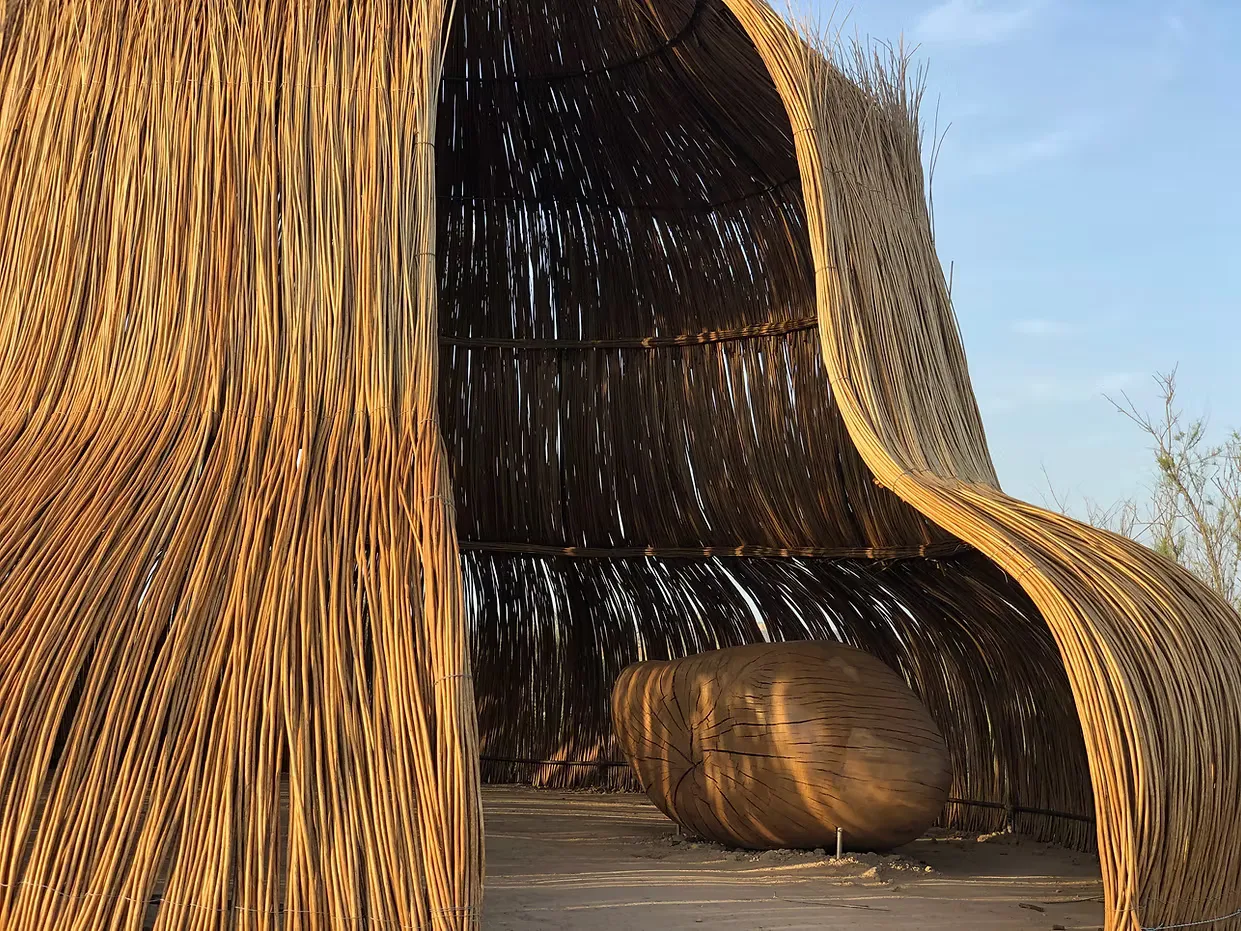
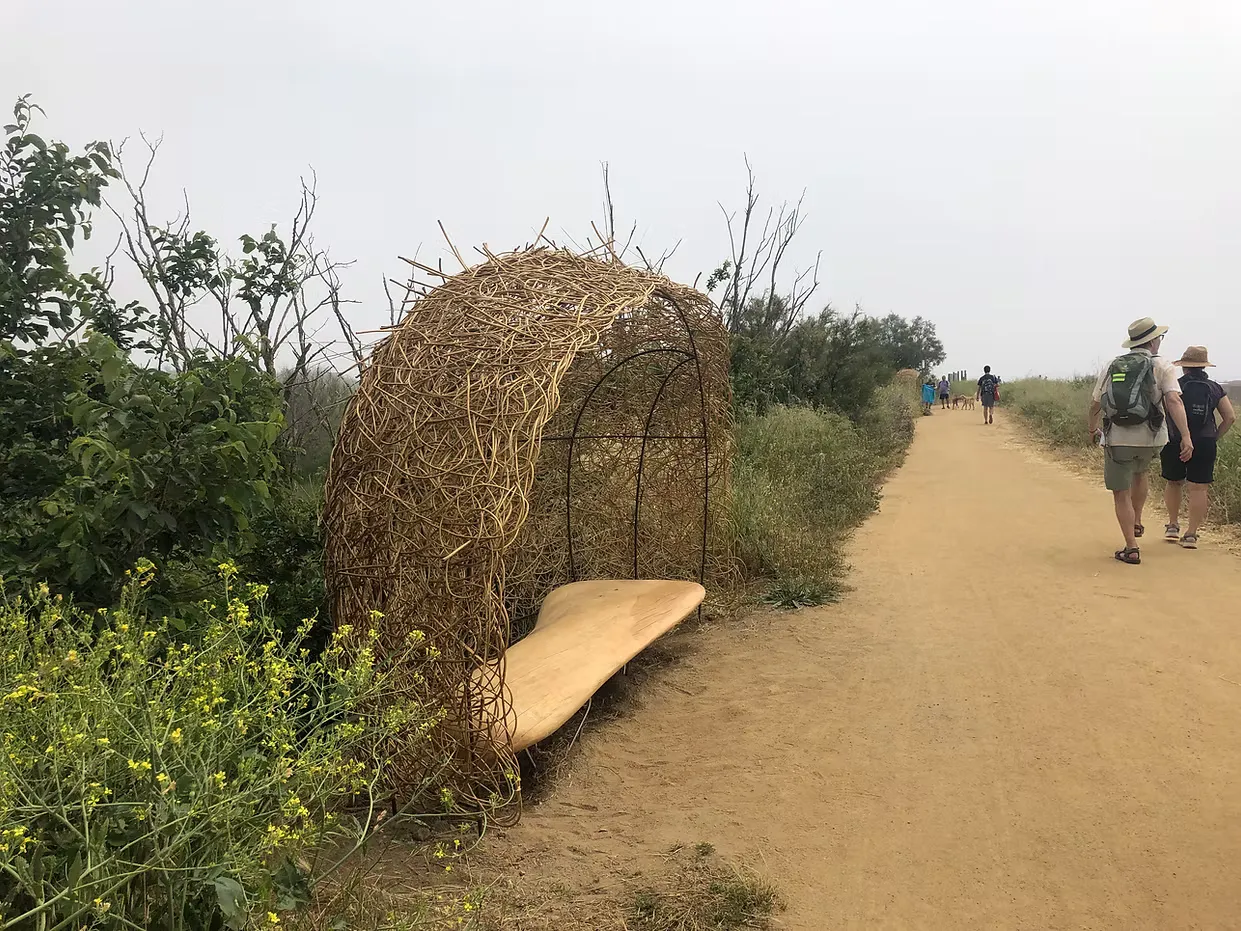
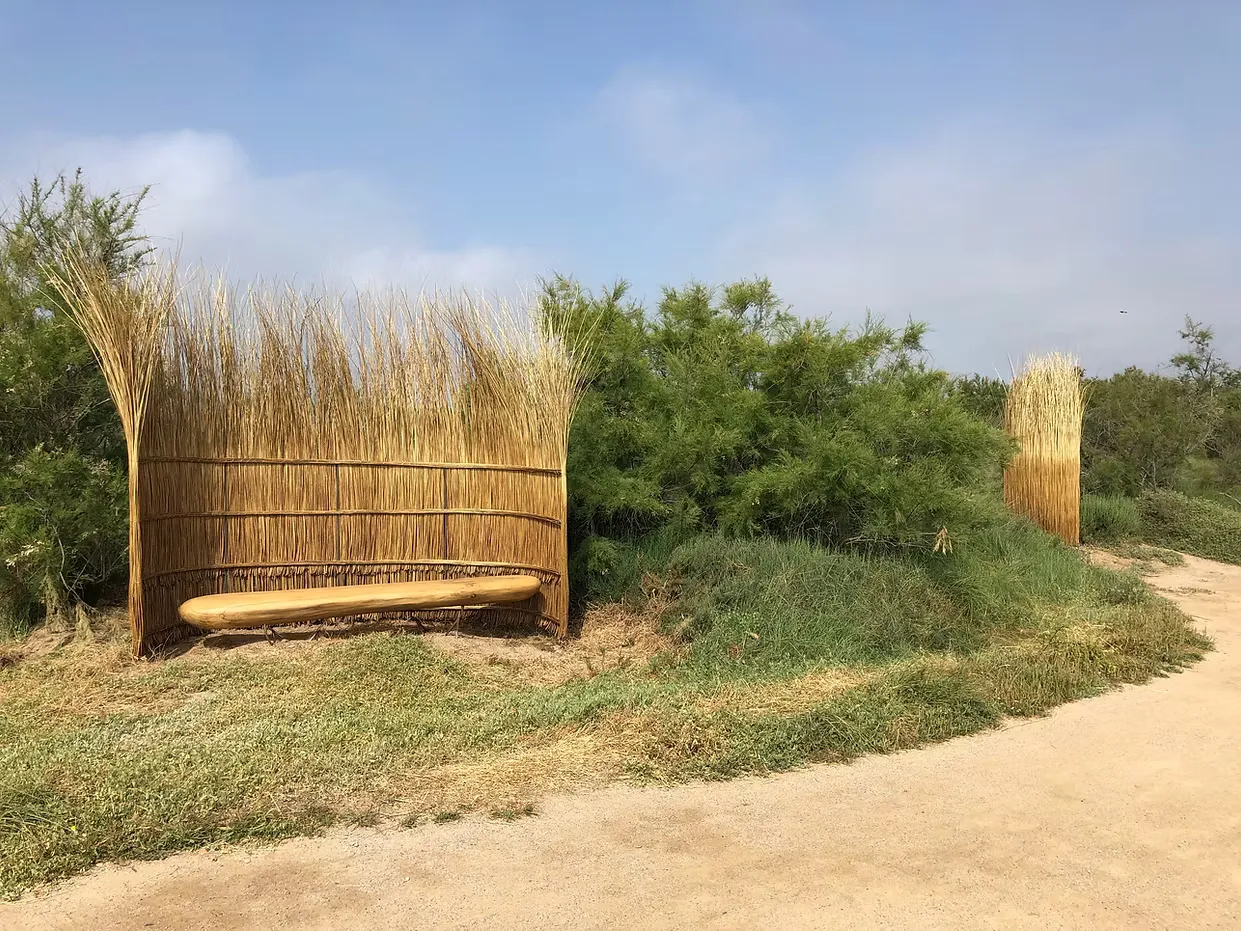
Design of 12 elements that aim to bring people closer to the unique ecosystem of the La Pletera Itinerary through sensory discoveries with a collection of artistic and functional, sustainable, and artisanal pieces made with solid wood and local plant fibers. These elements are of unique design conceived especially for this territory and the inspiration arises from the same environment. The objective is to promote the improvement of community values and foster a more respectful relationship with nature, through an innovative and creative proposal where nature, art and communication merge, following the biocentric design trend.
Materials
Local solid oak and cedar wood, plant fibers from wicker and iron structures.
Design
Manufacturing
Domestic Wild and Tramats.cat
Location
Montgrí Natural Park, Medes Islands and Baix Ter. La Pletera Accessible Itinerary, Catalunya.
🔗 Copy link
Rammed earth benches
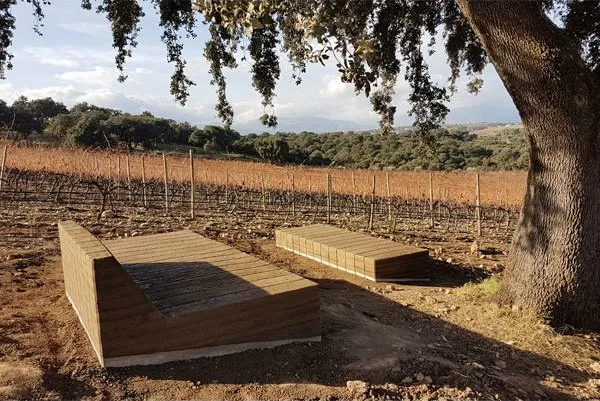
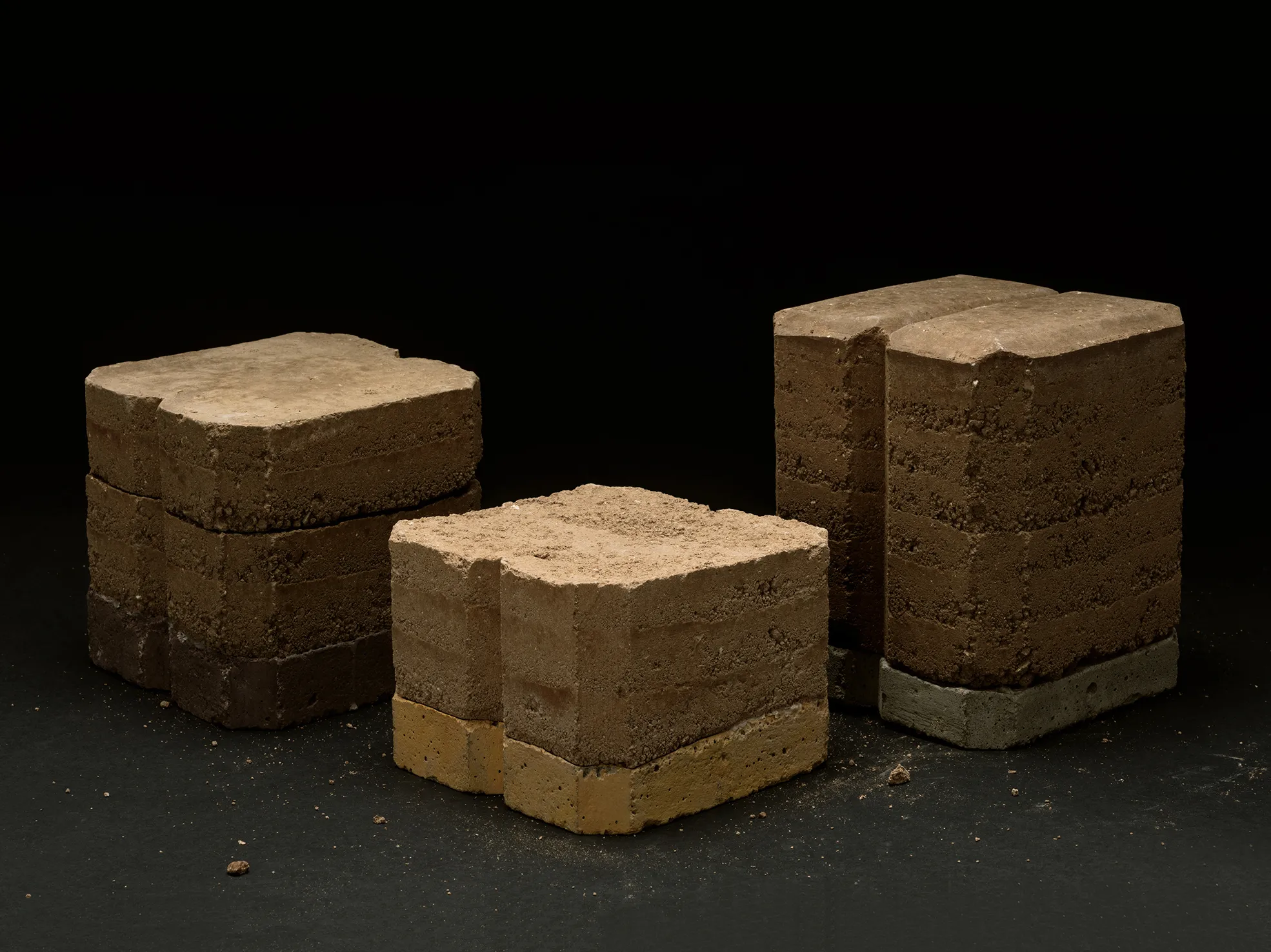
Benches designed to extend the experience of people visiting the wineries. Through their use, visitors can rest in different parts of the estate and enjoy a full immersion in the landscape. The ecological aesthetic accompanies this experience since the benches use local resources and low-energy manufacturing.
Material
Earth, water and lime. 5m³ of local earth stabilized with 5% cement. Rammed earth construction method consisting of building walls by filling formwork with different layers of moist clay soil, manually compacted with a rammer.
Design
Manufacturing
Location
Cortijo Los Aguilares in Ronda, Málaga.
🔗 Copy link
Socarrado, a shelter for reflection
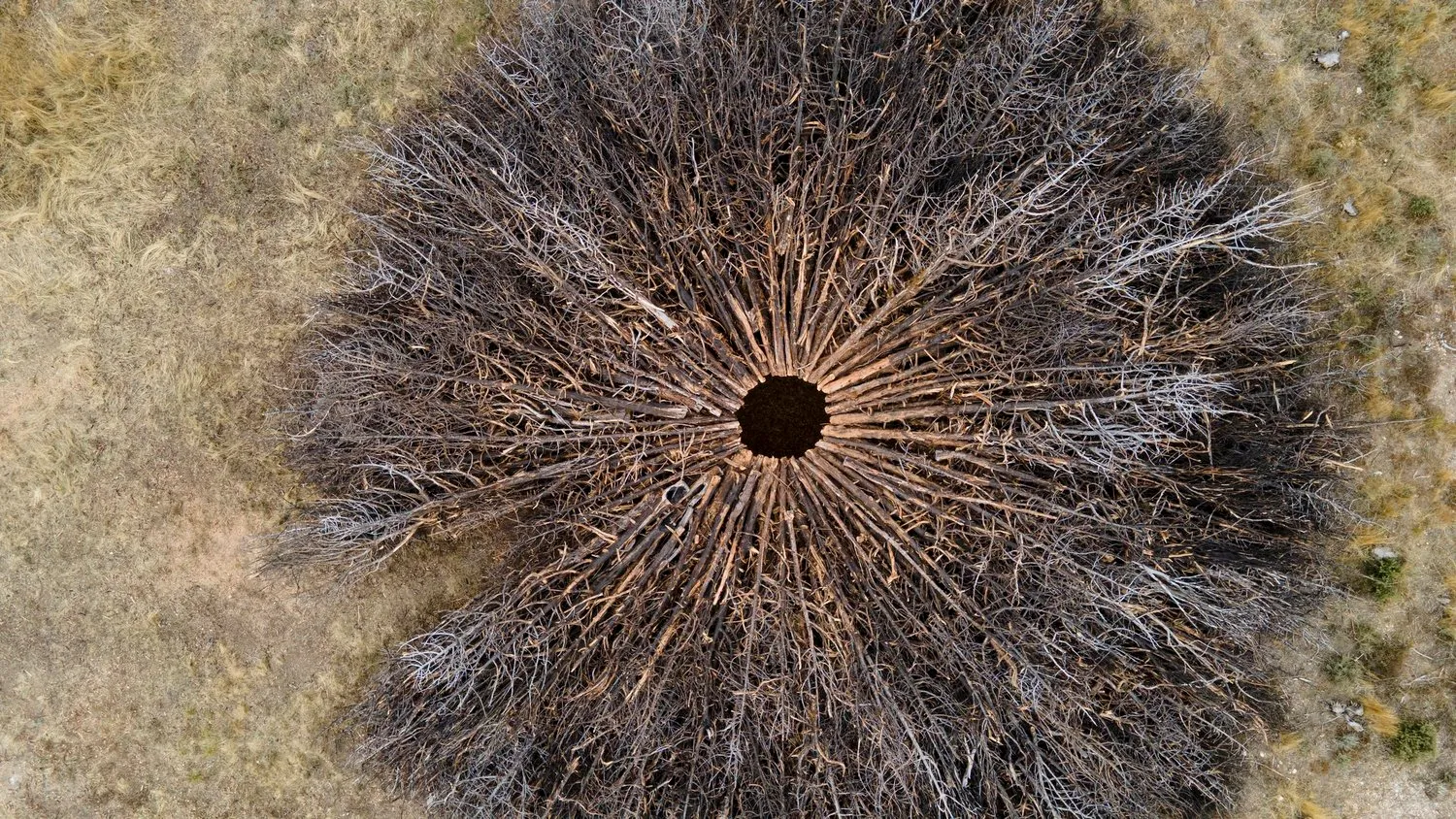
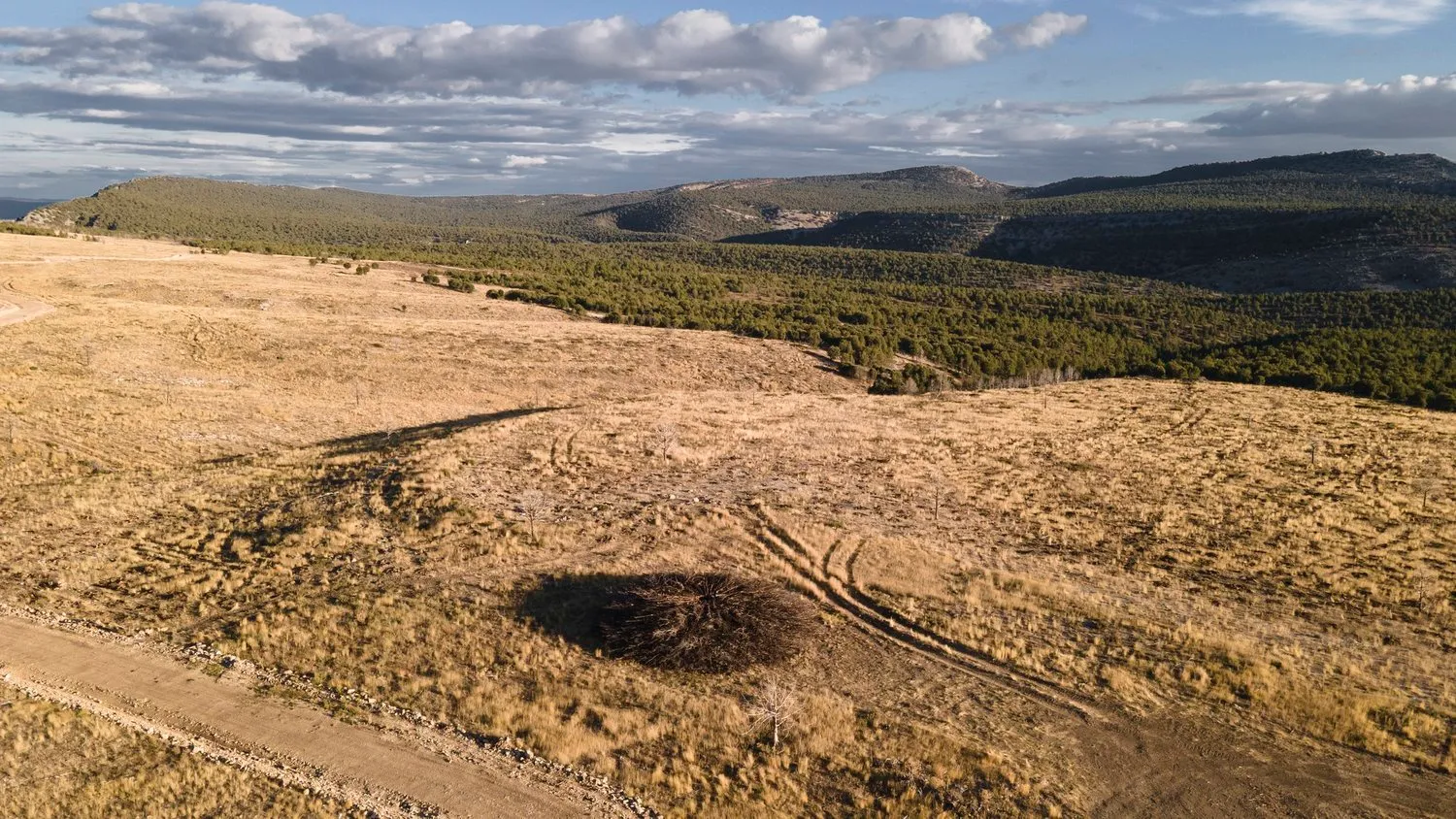
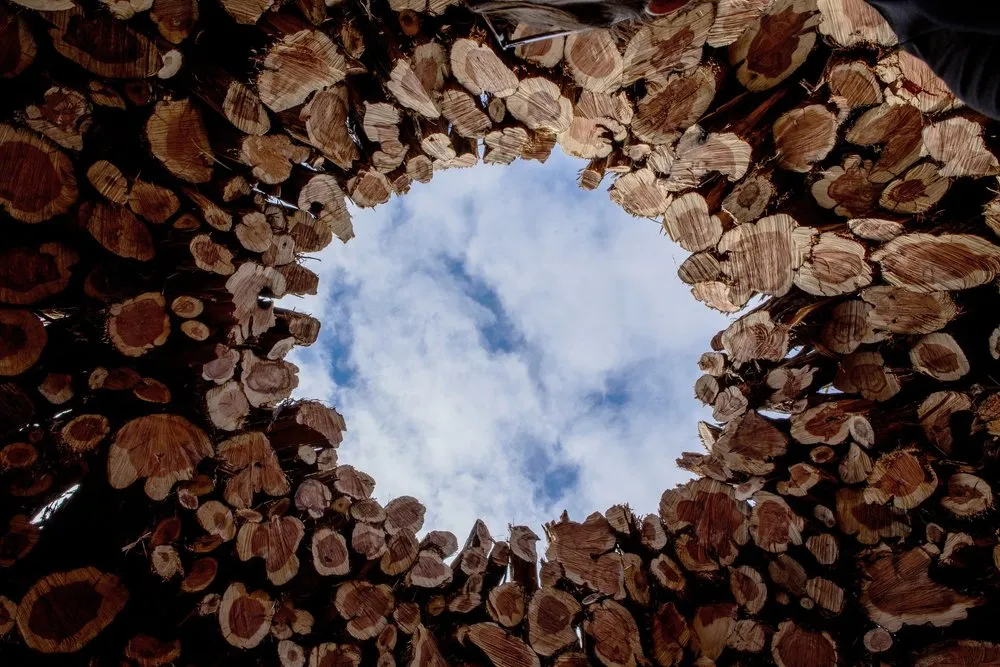
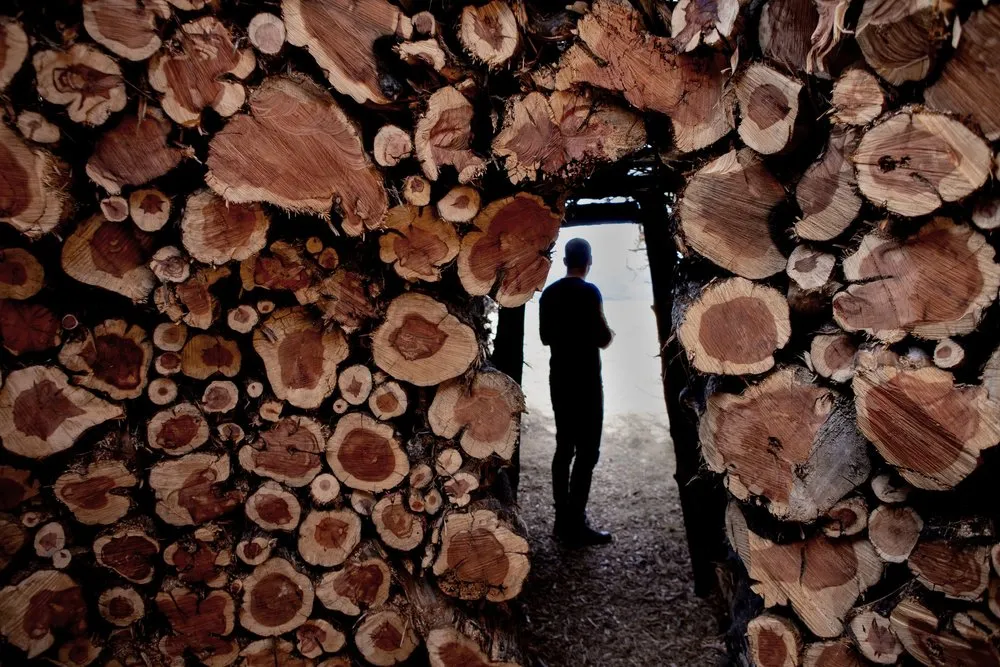
Socarrado is a poetic installation that transforms a landscape marked by fire into a space of resistance. Built with juniper logs burned in the 2022 forest fire in the Sabinares del Arlanza Natural Park, it forms a circular shelter inspired by the traditional loberas, shelters where shepherds protected their flocks at night. This ephemeral space invites people to enter and reconnect with silence, authenticity and the possibility of renewal even among the ashes of destruction.
Material
Made from burned juniper (sabina) trunks . The trunks were transported and assembled into a circular structure, culminating in a 3-meter diameter dome (lobera).
Design
Manufacturing
Somacyl, provided the juniper wood.
Triturados Montero, moved the trunks.
Almudena Cadalso, documented the process.
Location
Sabinares del Arlanza Natural Park, La Yecla, Burgos
🔗 Copy link
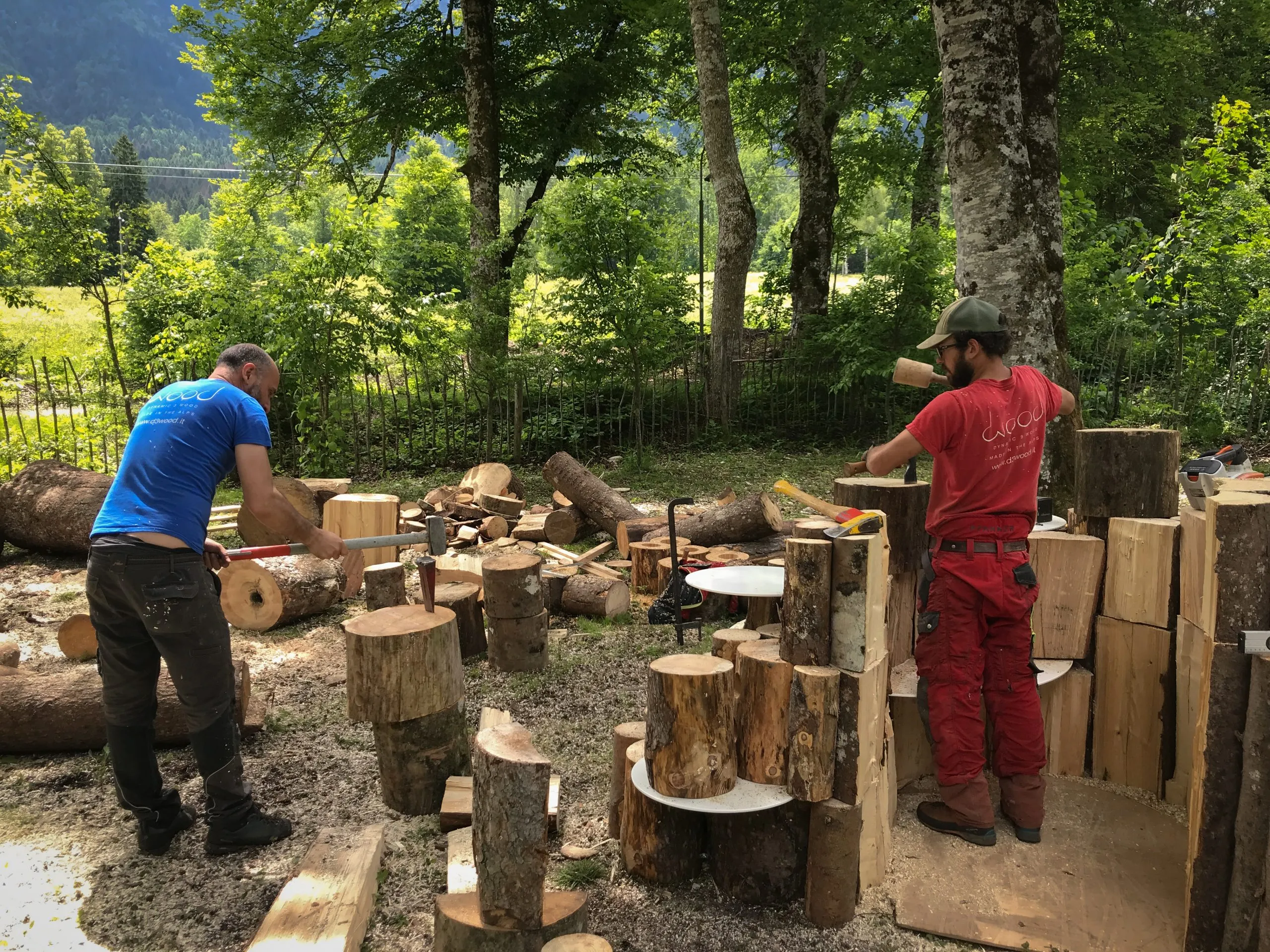
Tobusa shared bench
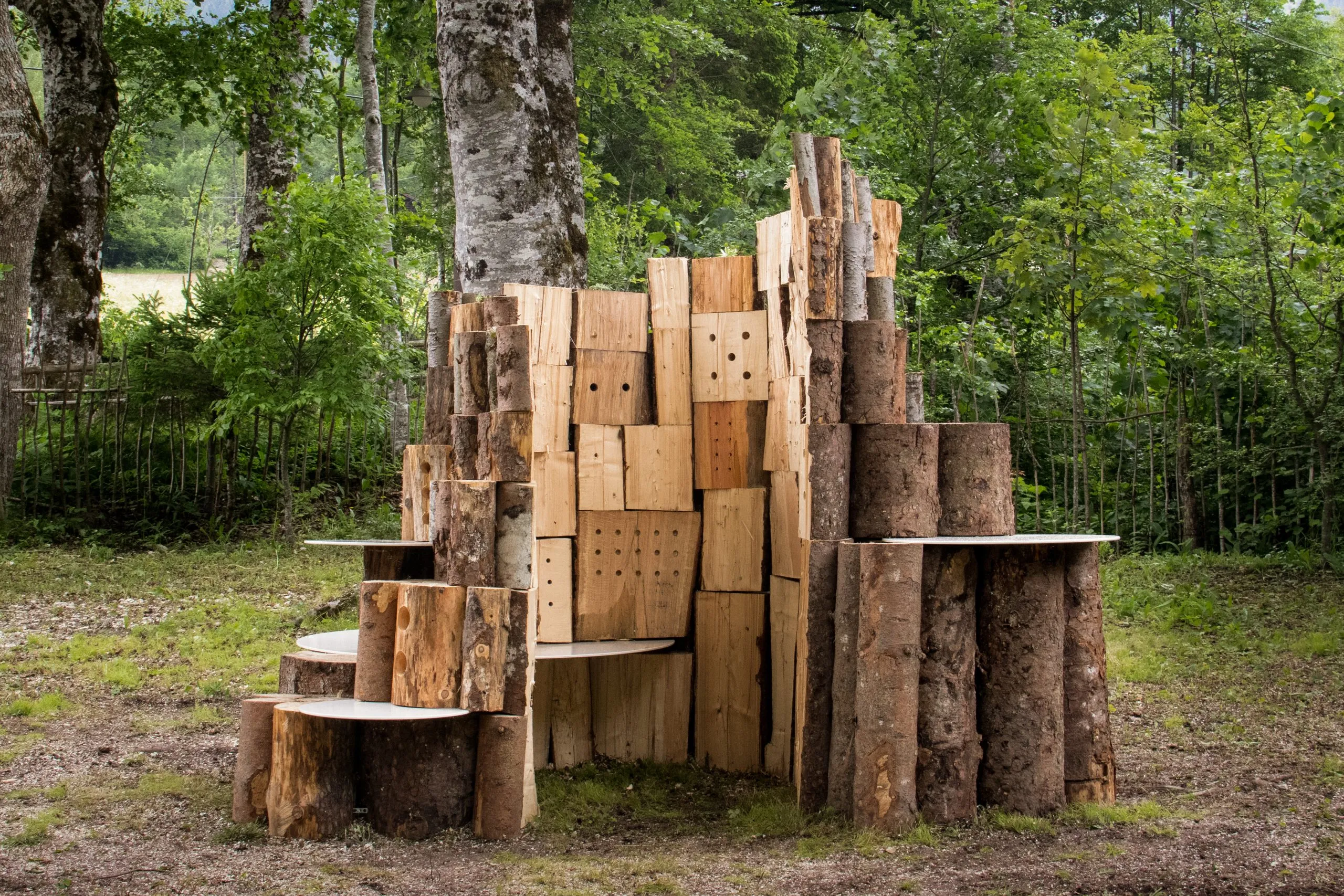
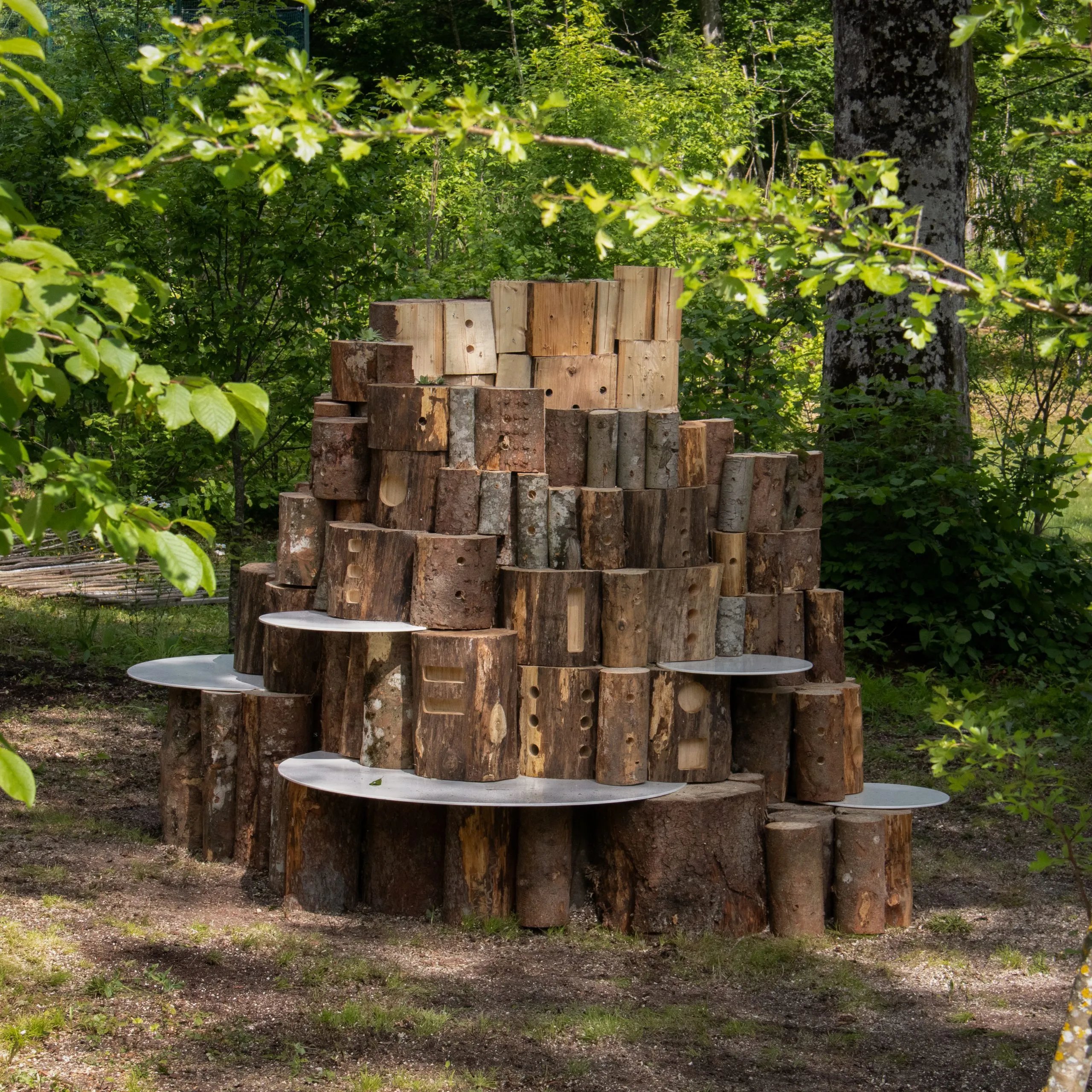
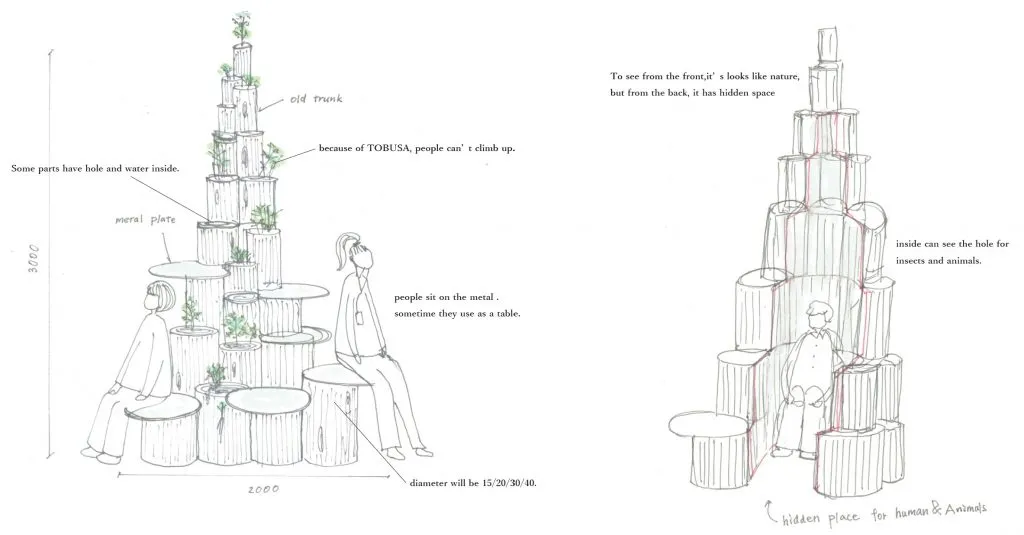
The Tobusa bench symbolizes a rebirth of tree trunks felled by the storm, which now become seats, homes for small plantations and shelters for the inhabitants of the local forest ecosystem. The installation is composed of individual stacked logs, varying in size, diameter (from 80 mm to 450 mm) and height, which varies according to the level of overlap between individual logs. Some of the larger logs were also CNC machined to create a regular geometric pattern of holes suitable for housing insects that populate the forest vegetation of Val di Sella.
Material
Tree trunks felled by storm Vaia in Triveneto (2018) and galvanized steel for seating.
Design
Manufacturing
Location
Arte Sella, Villa Strobele, Borgo Valsugana (TN)
🔗 Copy link
Ruup, forest library
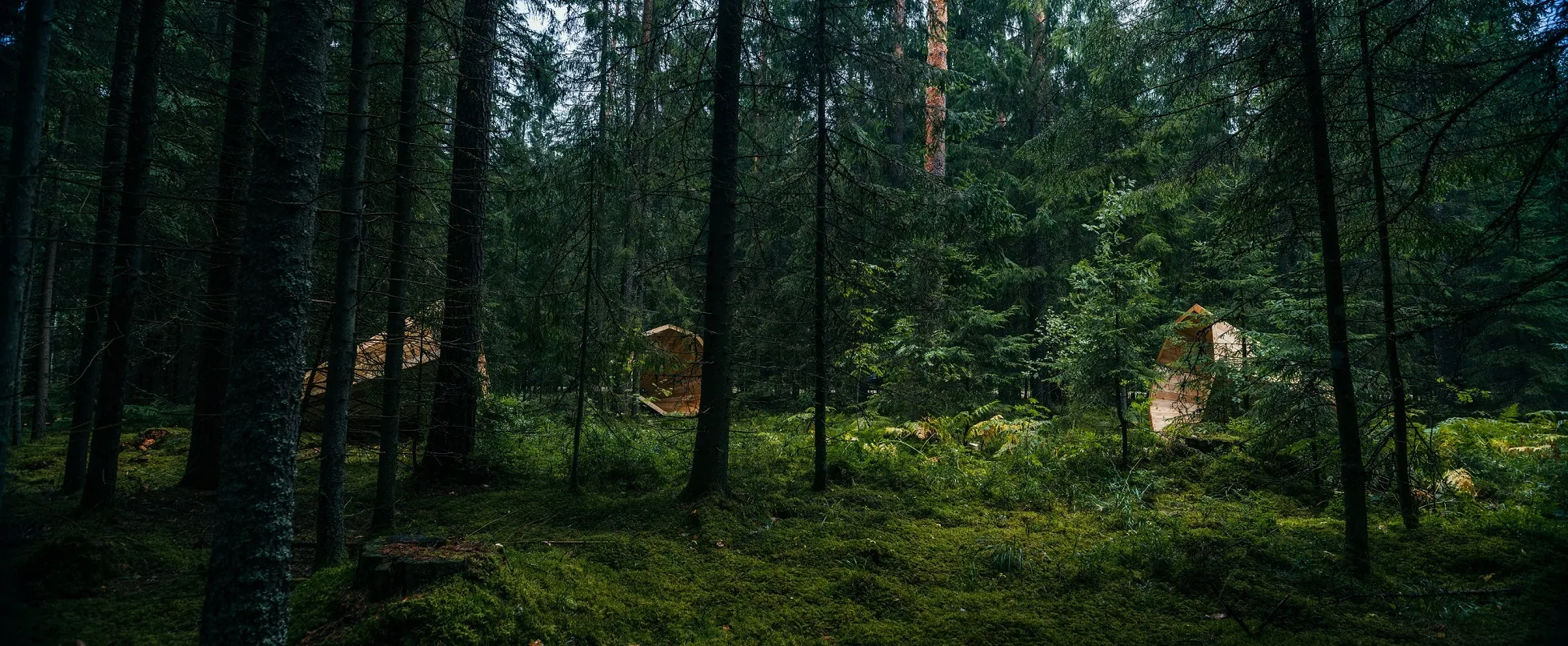
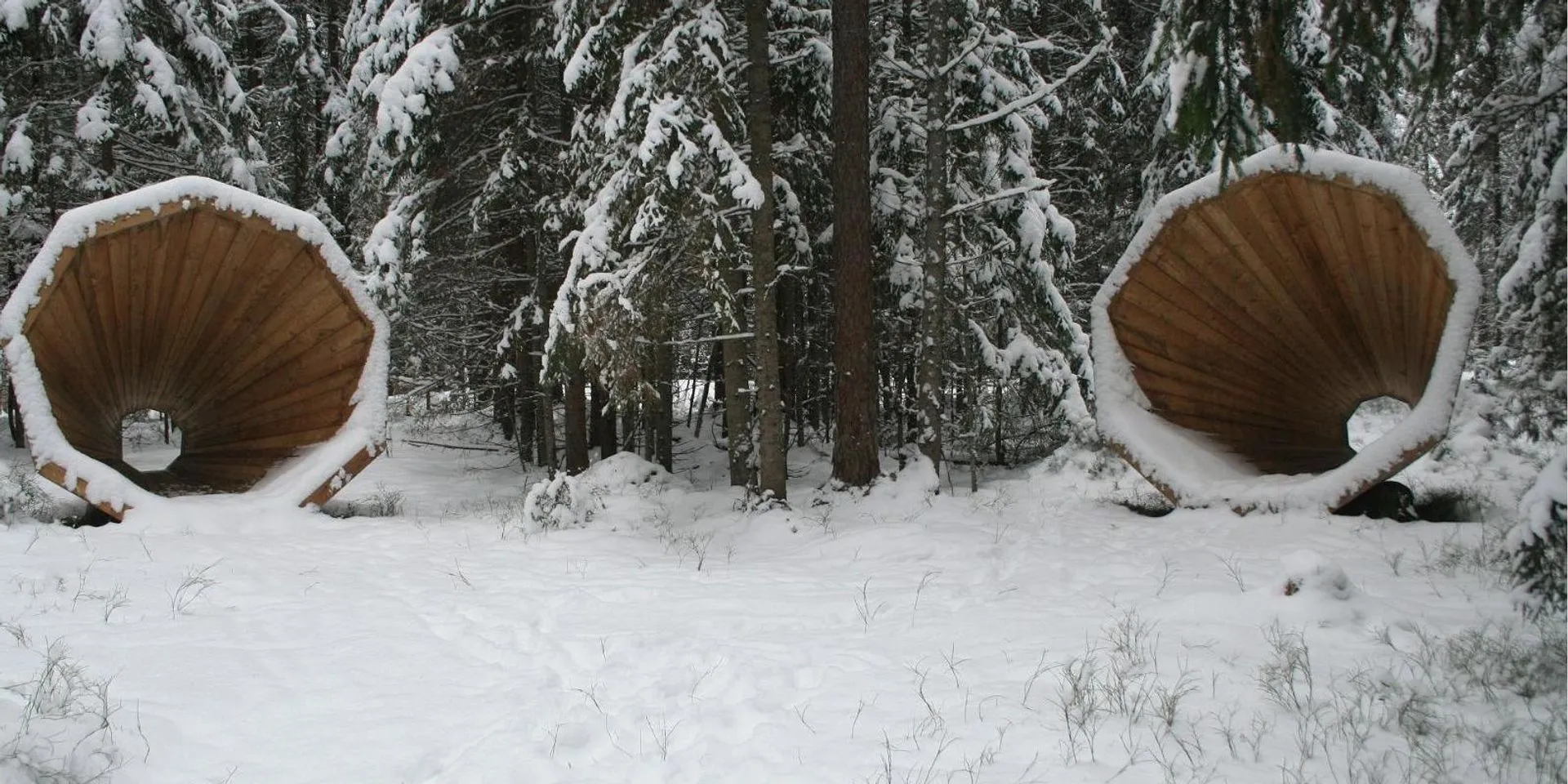
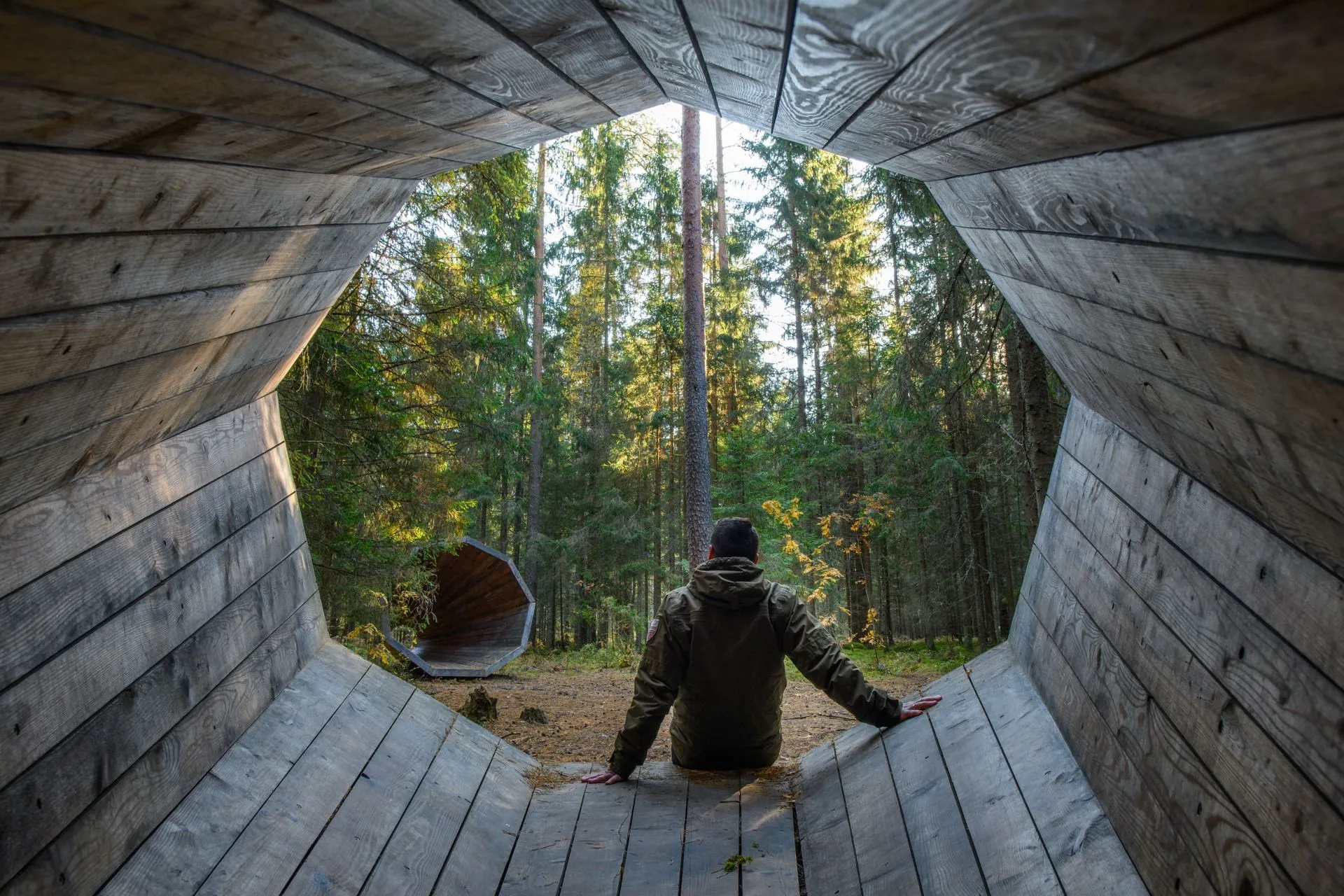
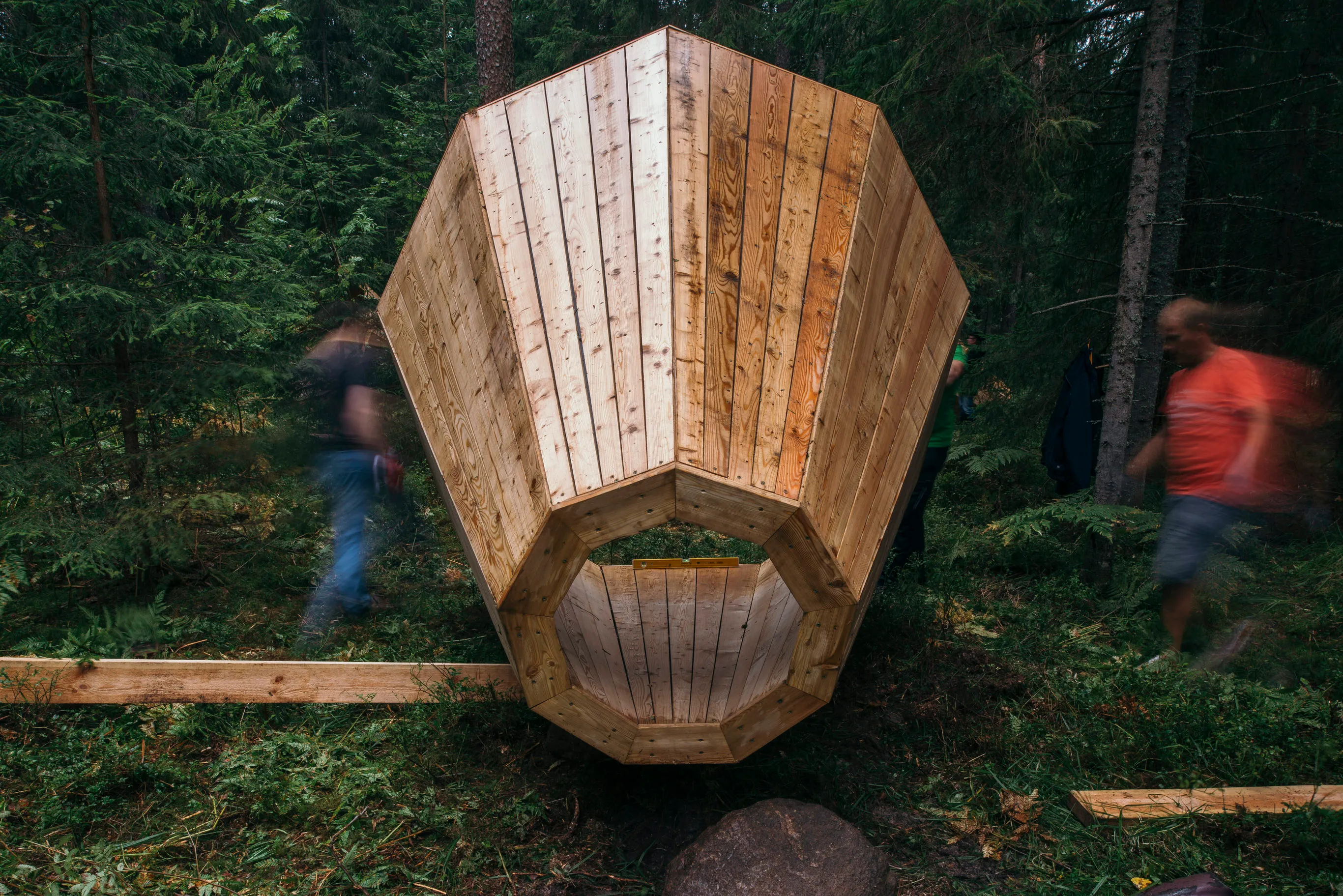
Giant megaphones are used to listen to the forests of Estonia and to create a library of sounds collected directly from the landscape – an audible book of nature. The installation seeks to reaffirm the profound connection between the country’s culture and its natural environment, inviting us to consider the possibility of a divine message emerging from the forest. It encourages wanderers to linger within these structures, waiting for the forest’s message to reveal itself through both sound and silence. Through active listening, we reconnect our “ecological self” with the ancestral, two-way communication that once existed between humans and the forest.
Material
Local wood
Design
Birgit Õigus, Tõnis Kalve, Ahti Grünberg and b210.
Manufacturing
Interior Architecture Department of the Estonian Academy of Arts (EKA) 2015
Location
Võrumaa, Pähni Nature Centre, Estonia
🔗 Copy link
Inverted creatures
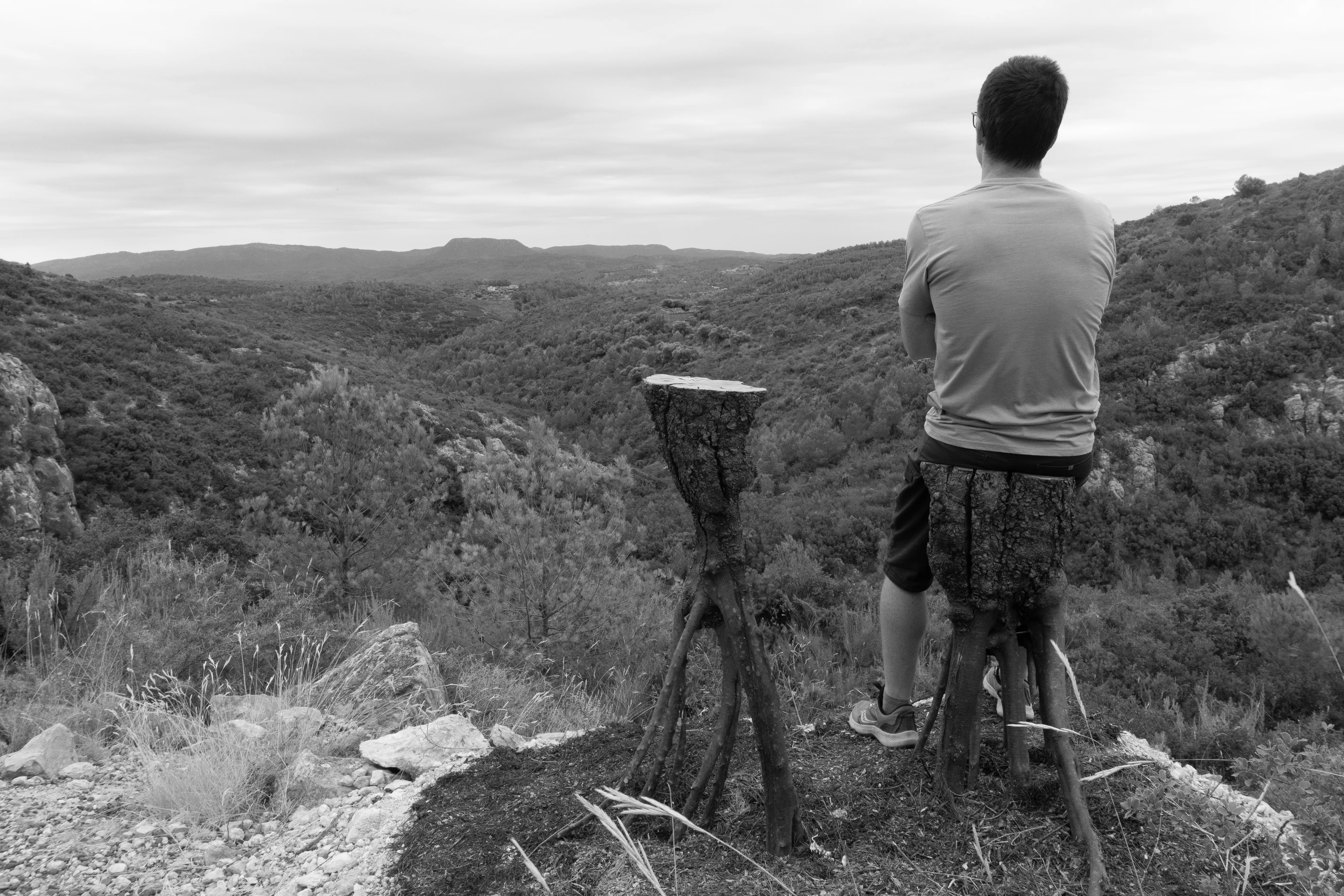
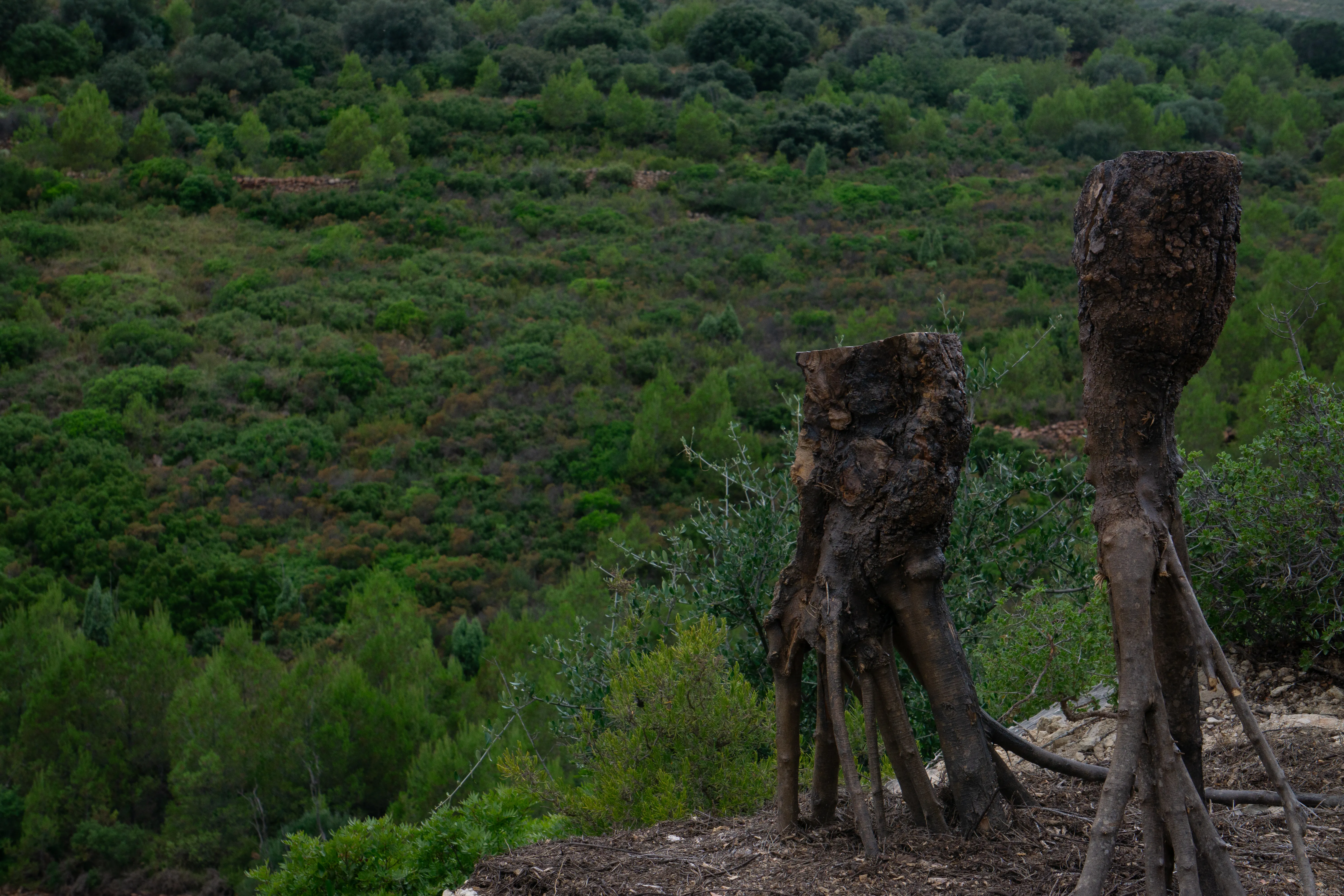
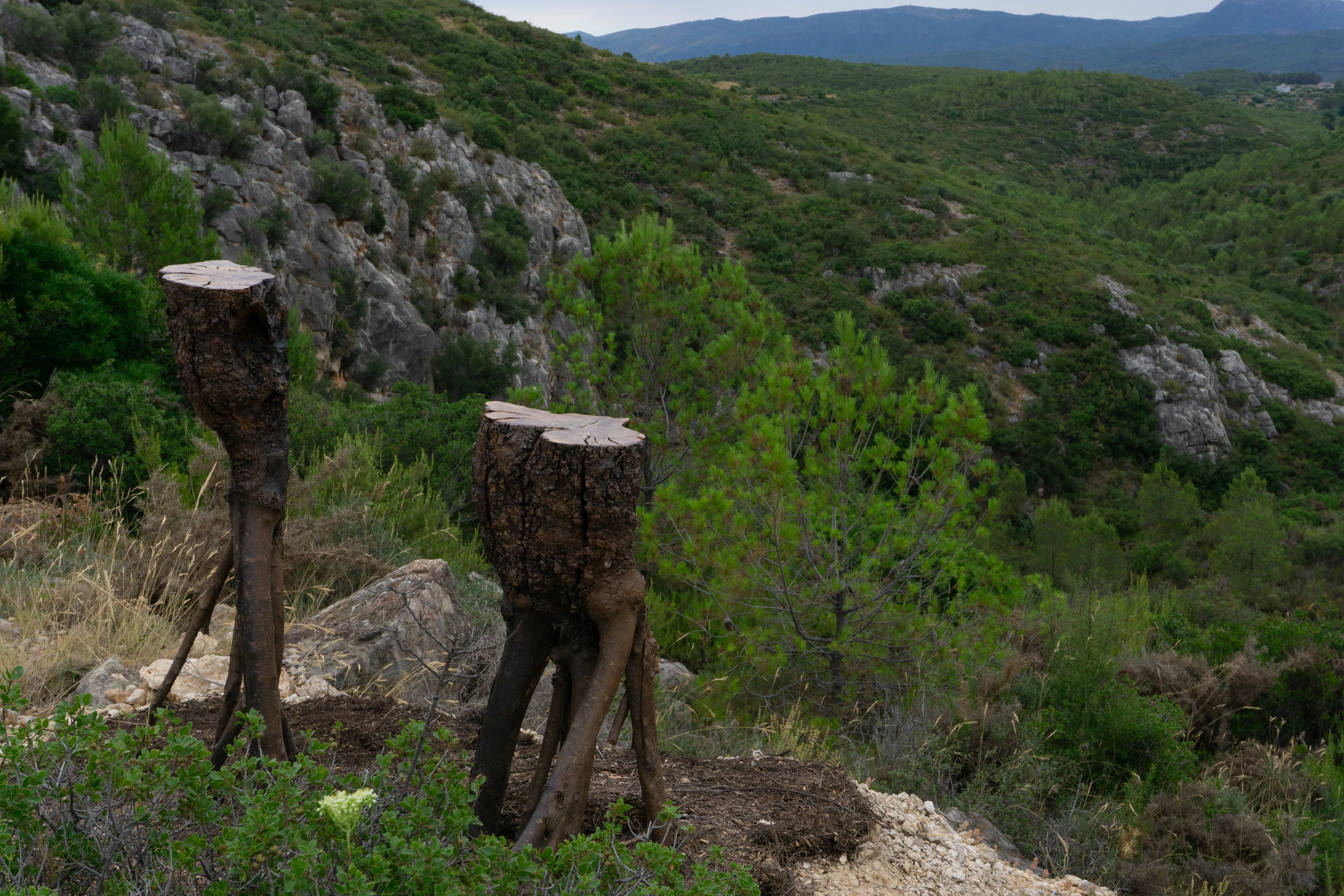
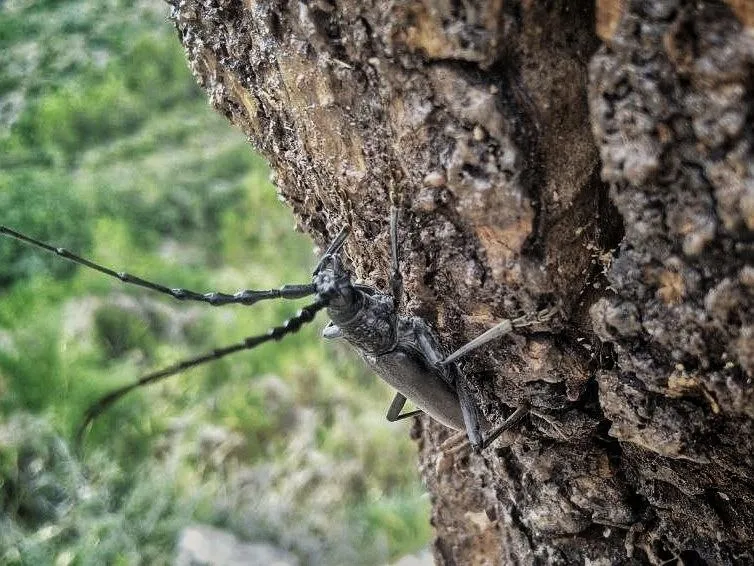
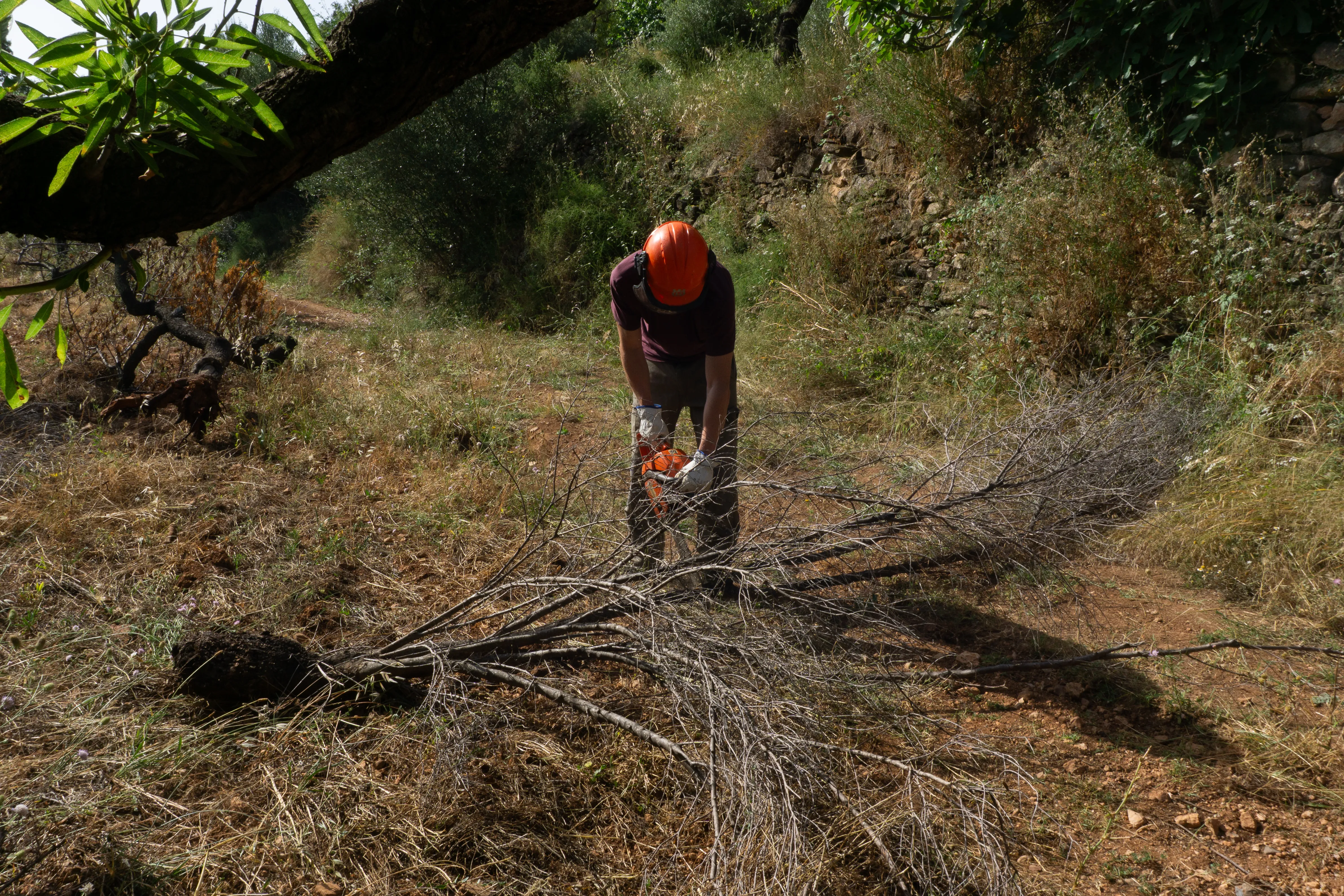
Elements designed from a biocentric and multispecies perspective. The final result questions consumption and production models through its own materiality: it uses agricultural waste, the environmental impact in manufacturing is minimal and proposes an aesthetic of sobriety that contrasts with the excess of the dominant material culture, offering an alternative based on respect for natural cycles. The name “inverted” moves away from its pejorative sense to become a transformative force from a practice situated in networks of coexistence and interdependence between species, thus enhancing ecological empathy.
Material
Local solid olive wood.
Design
Carmela Forés
Manufacturing
Carmela Forés and Carles Escrig
Location
Barranc de la Palanca, Les Useres, Castelló.
🔗 Copy link